When you escape from a narcissistic dysfunctional family as a scapegoat, it is common knowledge that you don’t leave unscathed. They seek to tell people you mutually know negative things about you. This includes friends, family, or other people in your circle. A lot of these things are really far-fetched and over-exaggerated. A saying goes: “If they can’t control you, they will aim to control people’s perceptions of you.”
It may seem shocking and disappointing that a lot of these people have changed towards you. It is very easy to blame the narcissists in this scenario. You still could, but it would be giving them way too much power. In this situation, you sometimes covertly thank them as they have exposed who is people actually are. Those people in your life never directly mentioned what was said about you. They also didn’t question things more. This speaks huge volumes! This also indicates that those relationships with those people in your life were fragmented. They were not strong to begin with. It shows that these people are stupid and gullible. They believe someone who possesses the character traits of the narcissists. This highlights their poor judgment in character.
Not only that, but these people are cowards and weak. Narcissists don’t really tear down things that are solid and tough. They break down things that are already crumbly and weak. This describes those people in your life who believed the smear campaign. All you have to do is rise above it.
In today’s world, masculinity is often ridiculed. If you express masculine traits—like directness, decisiveness, or even healthy assertiveness—there’s often an effort to infantilize you. Toxic individuals may try to “knock you down a peg,” using passive-aggressive tactics or condescension to undermine your confidence. This is not about who you are as a person but rather a reflection of their own inadequacies.
On the other hand, when you do something noble or altruistic, there’s often a patronizing element aimed at emasculating you. For example, if you carry out an act of kindness or generosity, it might be met with backhanded compliments. These remarks subtly put you down and label you as “soft” or “a sissy.” This is illogical and rooted in control—they seek to diminish your self-worth by twisting positive actions into something negative.
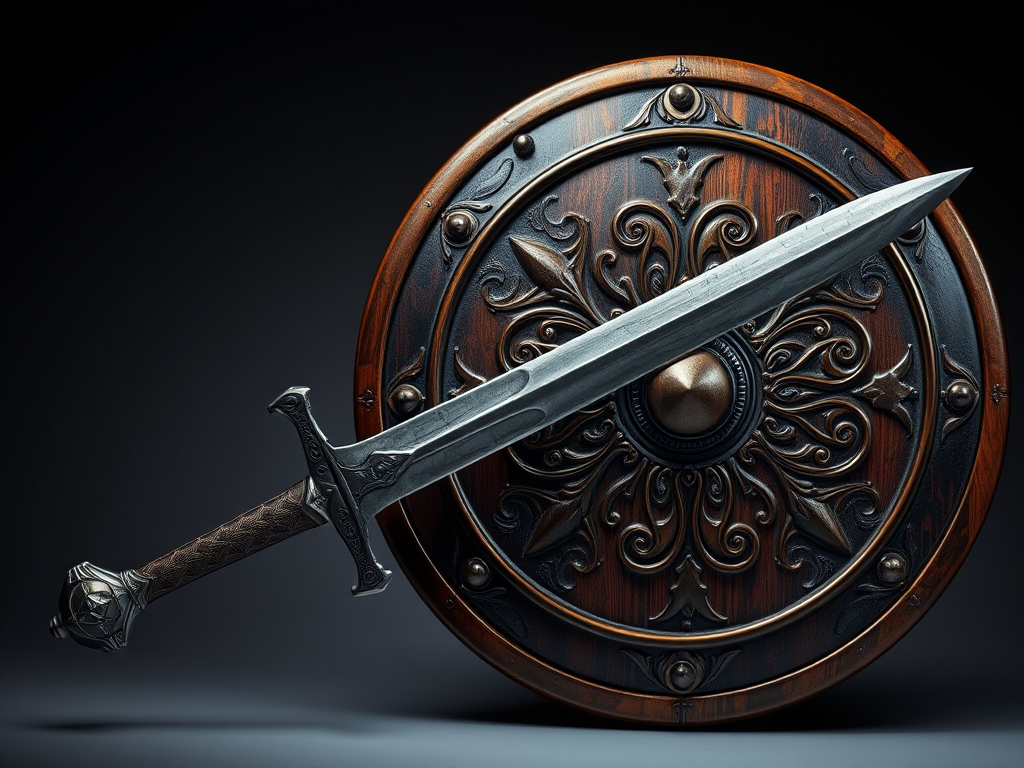
The Shield: Emotional Control
The shield shows emotional control—the ability to let their words fly over your head without engaging in their game. They thrive on reactions; denying them that satisfaction takes away their power.
Instead of reacting emotionally, let them talk. Toxic individuals often reveal their true selves over time. Their façade of superiority begins to crack, exposing them as wounded individuals projecting their own hurt onto others. Keep your composure. Refuse to stoop to their level. Doing so helps you protect your boundaries. You also preserve your dignity this way.
The Sword: Physical Confidence
While the shield shows emotional control, there are moments when using your sword becomes necessary. The sword symbolizes the cultivation of power to protect yourself.
For example, if someone raises their voice, this is where the sword comes into play. If they invade your personal space or try to physically push you around, it also applies. Decisiveness in these moments involves using strong body language to set boundaries. Standing tall, maintaining eye contact, and speaking firmly can often diffuse these situations before they escalate further. If physical defense becomes necessary, being fit and strong gives you the confidence to protect yourself effectively.
A key aspect of wielding the sword is working on your body image. Regular exercise, like going to the gym, not only improves physical strength but also elevates your confidence and competence. Feeling strong in your own body translates into feeling strong in your interactions with others.
To take this even further, learning a martial art can be transformative. Martial arts not only teach self-defense but also instill discipline, focus, and mental resilience. Knowing that you have the skills to ward off potential threats significantly boosts your confidence. It also allows you to navigate life with a sense of security.
Conclusion: Standing Firm in Your Identity
The key is recognizing that these attempts to ridicule masculinity—whether through infantilization or patronization—are not about you but about them. Stand firm in your identity and values. Use both the shield (emotional control) and the sword (decisiveness). This approach enables you to navigate these situations with strength and grace.

 Son in the Shadows: "Navigating Life as the Black Sheep of Narcissistic Parents"