As promised in my January post, I’m thrilled to share some exciting developments for our “Son in the Shadows” community.
Weekly YouTube Videos Launch
I’ve officially launched a YouTube channel to complement our blog! This new platform will allow us to dive deeper into the topics we’ve explored so far. It will also introduce new, related subjects.
What to Expect:
In-depth explorations of narcissistic family dynamics
Insights into the male scapegoat experience
Practical strategies for healing and recovery
Our first video is now live! It’s a mini-introduction to set the stage for what’s to come. I’d love for you to take a look and share your thoughts.
Upcoming Topics
In the weeks ahead, we’ll be covering a range of crucial subjects, including:
The toxic rules in narcissistic families
Understanding and breaking free from dysfunctional family roles
Techniques for setting boundaries with narcissistic family members
Strategies for building self-esteem after narcissistic abuse
Your Involvement Matters
Your engagement is crucial to the growth of our community:
What topics would you like to see covered?
How did you find the first video?
Share your experiences or questions in the comments below
Join Us Every Friday
New videos will be posted every Friday, offering regular insights and support. To stay updated:
Subscribe to our YouTube channel: @SonintheShadows
Turn on notifications to never miss a video
Share our content with others who might benefit
A Personal Note
Starting this YouTube channel is more than just an expansion of our blog. It’s a step towards creating a supportive community for those navigating the challenges of toxic family dynamics. My hope is that through these videos, we can foster understanding, healing, and growth together.
Thank you for being part of this journey. Your support and engagement mean the world to me.
Take a look at our first video, let me know what you think, and don’t forget to subscribe!
Looking forward to connecting with you all in this new format!
While today is often celebrated as a day for romantic love, it’s also a perfect opportunity to reflect on the most important relationship of all: the one you have with yourself.
“You should tell people who you are, otherwise they will do this for you.” This quote, often attributed to Ursula K. Le Guin, hits at the heart of self-esteem, especially for men. In a world that constantly bombards us with images of what we should be – it’s easy to lose sight of who we actually are. We start letting external forces, societal expectations, and even the opinions of others define us. But what happens when those external measures of worth crumble? What’s left when the applause fades?
This post, number 14 in our journey through Sons in the Shadows, dives into the crucial connection between self-esteem and owning your identity. It’s about building a foundation of inner security that doesn’t depend on likes, validation, or the fleeting approval of others.
The quote above isn’t just about telling people your name or your job title. It’s about declaring your values, your passions, your beliefs – the core elements that make you you. It’s about taking ownership of your narrative, rather than letting others write it for you. When we allow external forces to define us, we become chameleons, constantly shifting and adapting to fit someone else’s mold. This can lead to a sense of emptiness and a constant craving for validation.
Think about it. How often do you find yourself striving for things that you think will impress others, rather than pursuing what truly brings you joy and fulfillment? We chase the socially respected job, having the scripted life plan, or mold our personalities to fit a certain ideal, all in the hope of earning approval. But this is a fragile foundation. External validation is fleeting. It’s like building your house on sand – eventually, it will shift and crumble.
True self-esteem comes from within. It’s about cultivating a deep sense of self-acceptance and believing in your own worth, regardless of external circumstances. It’s about recognizing your strengths, acknowledging your weaknesses, and embracing the totality of who you are – flaws and all. And here’s the kicker: this inner security is incredibly attractive.
Not in a superficial, “look at me” kind of way. Genuine confidence and self-acceptance radiate outwards. When you’re secure in who you are, you don’t need to put on a show or pretend to be someone you’re not. This authenticity draws people to you. It builds genuine connections and attracts positive things into your life. People are drawn to those who are comfortable in their own skin, who aren’t afraid to be themselves.
So, how do you cultivate this inner security? It’s a journey, not a destination, but here are a few steps you can take:
Challenge Negative Self-Talk: Become aware of the negative thoughts that run through your head. Are you constantly criticizing yourself? Replace those negative thoughts with positive affirmations.
Focus on Your Strengths: Take time to acknowledge your accomplishments, both big and small. What are you good at? What are you proud of?
Set Realistic Goals: Set achievable goals for yourself and celebrate your progress along the way. Small wins can build momentum and boost your self-esteem.
Practice Self-Compassion: Be kind to yourself, especially when you make mistakes. Everyone makes mistakes. It’s part of being human.
Surround Yourself with Positivity: Choose to spend time with people who lift you up and support you, not those who tear you down.
Building self-esteem takes time and effort, but it’s the most worthwhile investment you can make in yourself. It’s about taking ownership of your identity and defining yourself on your own terms. Remember, you should tell people who you are, otherwise, they will do this for you. Start today. Start now. Start with yourself.
This topic has been simmering in my mind for a long time, and I’ve been planning to write about it. Some aspects were tough to wrap my head around, not because they’re complicated – they’re pretty straightforward, actually. Instead, it’s because it’s not necessarily a black-and-white area. This is especially true if you’re a male who grew up in a toxic, narcissistic family.
‘Help’ is a word that can feel like the opposite of what it should be. I used to falsely interpret it as help no matter the cost, even if it led to negative consequences. It included help even if I didn’t ask for it, or knew deep down it wasn’t in my best interest. Man, was I wrong about that! Or maybe, subconsciously, I was right because all along, the help I was made to take on wasn’t suitable. Narcissist parents use this tactic a lot to manipulate and control. It works well with small children who haven’t yet formed their preferences and developed their identity.
Yet, as a person grows, particularly a male, they start to feel threatened by their masculine development. From my personal experience, I’d be accused of taking my independence too far or not listening enough. What an odd thing to say to a young male growing into an adult! This should be encouraged, not stifled.
This could also explain a scapegoat’s initial aversion for help.Starting from the beginning as a scapegoat, you may have had a distant father and an overbearing, needy mother. This isn’t always the case. Still, from my experiences and conversations with others, I’ve noticed a pattern.
Writers like Devin Stone often describe the overt, active, grandiose narcissist as usually the father. The quieter, passive-aggressive narcissist is usually the mother.This ties into our complicated relationship with help as male scapegoats. On one hand, you’d want to seek help, especially as a kid. But since narcissists don’t really care about anyone but themselves, the help doesn’t feel genuine. So, you’d go to your father for help. He couldn’t be bothered. Worse, he’d easily show annoyance and irritation, giving a vibe of being pissed off. This is him demonstrating that you’re a nuisance, leading you to see yourself as a burden.In the past, you might’ve gotten the kind of help that was always set to undermine you. A needy, narcissistic mother would be condescending, offering help like you’re a five-year-old. Also, insisting on being overly involved and feigning concern unnecessarily is a tool to keep you dependent and second-guessing yourself.For some of us, this can lead to learned helplessness – thinking we can’t take action and make decisions ourselves. This is bullshit!
Sometimes we decide we don’t want to deal with unreliable or insecure people trying to bring us down. So, we take a different, harder path where we become ultra-independent. This becomes a positive trait for men as we can transfer this energy into other parts of our lives. But how do you reverse that?I believe you should refuse help from untrustworthy people and those who derive pleasure from creating petty power plays.
Keep in mind narcissists will use snippets of the truth to manipulate the situation. For instance, my mother would also say, ‘You don’t like asking for help.’ Well, it’s no surprise if someone is averse to this if they sense an ulterior motive. Narcissists use ‘help’ as a guise to control most of the time. They place themselves in a superior position while failing to actually help. So how do you find trustworthy sources of help? Start by looking at their life and character. Are they generally supportive and reliable? Do they respect your boundaries and autonomy? Consider those aspects of who they are. If they sit well with you, then proceed. Always remain an active participant when receiving help. Ultimately, it’s your life. Also remember to challenge those harmful beliefs that prevent you from seeking support.
It’s beneficial to bounce ideas off other people. Getting help along the way is important in our careers, daily tasks, or social interactions. Consider seeking professional support, like therapy, to process your experiences. Develop healthier coping mechanisms with assistance from a male who can recognize such patterns. I also think the journey of healing from being the scapegoat can’t be done alone. It can, but it’ll take years and be a much more difficult experience. Realizing patterns earlier in life by going to others for help has been key for me. That’s why I stress the importance of confiding in and interacting with safe and loyal people on this journey.
As January draws to a close, I start to reflect. This month feels like both a marathon and a masterclass in resilience.
The Unexpected Power of Connection
This month has been a profound journey of understanding that no significant achievement happens in isolation. Networking isn’t just about collecting business cards or LinkedIn connections – it’s about creating meaningful relationships that transform our potential.
Lessons Learned
The courage to ask for help is a strength, not a weakness
Collaboration multiplies individual potential
Sharing vulnerabilities opens unexpected doors
Progress regardless if it is big or small is still progress
Glimpse into February
While I’m keeping some exciting plans under wraps, February promises to be a month of strategic unveilings and creative developments. Stay tuned for some transformative announcements that will challenge conventional thinking.
My Networking Highlights
Business enterprise event participation
Strategic conversations with entrepreneurs
Breaking down personal barriers
Recognizing the value of collective wisdom
As I step into the next chapter, I’m reminded that our greatest growth often comes from the connections we nurture and the courage to reach out
I reflected on my last post on perfectionism. I thought about a few other related topics. I had considered these within the last few years or so. Nevertheless, this thought became more vivid as I was in the middle of my workout this morning. This is a perfect segue to my next discussion.
Also, the path to success and to fulfill your potential ultimately comes from failure and setbacks. It will involve at times taking a step back, evaluating things, and doing something unconventional. I read a quote somewhere. It said, “You are not scared of the actual failure. The fear is about what people will think.” I think this hit home for me, as a man we want to be seen as competent and strong.
A tiny error or mishap could ruin this. It also goes to my experience that if a setback occurs, toxic family members start to become patronizing and unsupportive. I have now learned to ignore this, as you can’t control people’s reactions. At the end of the day, it says more about them than you. Many people are scared and feel ashamed of others’ opinions. They avoid doing what you try and project that fear onto you when you take on a new challenge.
The second fear is being seen as ‘bad’. I think this term is broad. In society now, a lot of censorship targets male behavior. This is obvious with movements like feminism and #MeToo. Coupled with messages that boys get in schools about being seen as bad.
As a male scapegoat, you are judged harshly. This intensifies as you’re given all sorts of labels. Examples include ‘difficult’ and ‘rebellious’. I believe that human nature has many layers. One can’t be perfect all the time. You are not hurting others. It is okay to have different preferences and not feel that it makes you bad. This could be a particular hobby or personal style.
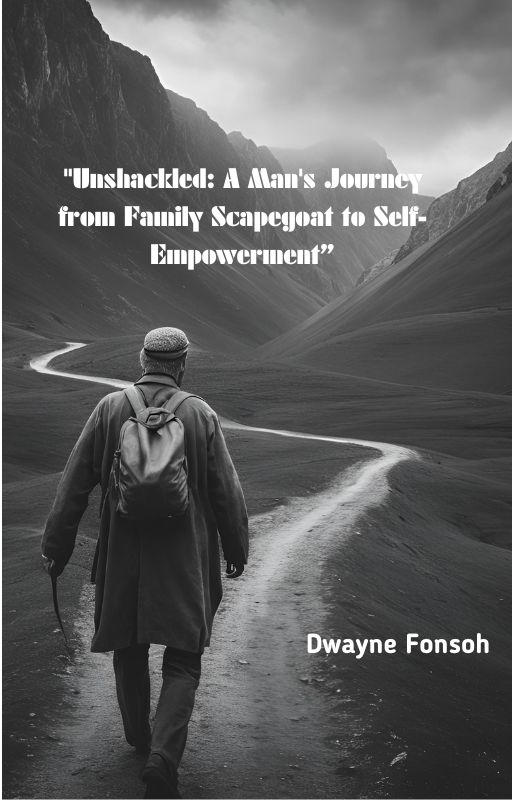
I would love to hear what mistakes you were afraid to make. Were you perceived as bad? If so, how? This topic will be explored in more detail in my upcoming ebook, “Unshackled: A Man’s Journey from Family Scapegoat to Self-Empowerment”.
Hey all! I hope everyone is persevering through January since it is a very long month. As the first month of a new year feels long, this is a good opportunity for us. We can work on our goals and prepare for a good start. Towards the end of last year, I mentioned that I would start posting regularly in the new year. I committed to that.
Unfortunately, this has not happened. I have been juggling multiple projects. Also, I am preparing for the release of “Unshackled: A Man’s Journey from Family Scapegoat to Self-Empowerment”. It is still on pre-sale. A release date will be confirmed soon.
I realize that during a busy period, one can feel overwhelmed and want to be sure everything is right. This includes wanting every single blog post to be perfect and flawless. This explains why it has been two weeks since my last post. I realized that this has resulted in sinking into feelings of perfectionism. It is not to say being diligent and wanting to be precise is a negative trait at all. But, leaning at the extreme end could reverse those positive traits.
For us men, who have been scapegoated in the past, making a single mistake can ruin our momentum. Even a slight mishap in our plans or tasks can have this effect. I have learned that mistakes or situations not going perfectly are a part of life.
This can be easier said than done especially for us, male scapegoats. If we make a mistake or if something in our lives goes wrong our ego takes a huge hit. From my experience, it is mainly due to fear of criticism from experiencing this constantly while growing up. As a result, it would lead to difficulties with self-acceptance and self-worth.
Imperfections are something to embrace because if you gradually improve you can look at how far you have come. Also, imperfections make you more relatable and real. This is something that was not allowed in a toxic environment with a lot of censorship. Ultimately, perfectionism will lead to procrastination.
During the quiet month of January, it has given me time to think about what is important. I keep in mind that gradual progress is still progress, no matter how small. Even the odd bad day is not a death sentence. It is a chance to be accountable and move ahead.
There are different ways that perfectionism can be combat. Firstly larger tasks can be broken down into small manageable steps. Also celebrate small wins. This is something that happened to me this past Sunday. I didn’t feel like going to the gym but I still went anyway. I didn’t do everything I intended but hit a PR on the deadlift. So, I would like you to think about what you achieved during the week. It can be anything.
As I continue to work on the eBook and other tasks, I am learning. Progress is not about perfection. It is about consistent effort. I look forward to sharing more of my journey with you in the coming weeks.
Today is an exciting milestone. I am announcing the pre-sale of my upcoming book, “Unshackled: A Man’s Journey from Family Scapegoat to Self-Empowerment.”Key Details:
Pre-sale Date: January 7th 2025
Official Release: TBA
Special Pre-sale Price: A further 20% off from previous price!- $10.90 (price goes up after pre-sale)
This book is more than just a story. It serves as a guide for anyone who has felt trapped by family dynamics or personal limitations. My journey is your invitation to break free and rewrite your narrative.Pre-order now and be among the first to embark on this transformative journey.
Today is the final day of 2024. I must say personally it’s been a busy year. Still, it has definitely been a year of growth. It included a period of reflection and learning lessons. One of the biggest lessons I learned this year was the importance of prioritizing time to myself amidst the hustle. As I was thinking today about my next post, I was unsure about what to post. Today is a day where a lot of people make plans or go out. Sometimes less is more. I understand everyone will be busy, whether going out or staying in. It’s a day we have dedicated to ourselves. I just wanted to put a message out to wish you all well.
The holiday period has been both relaxing and busy. I have been working and preparing for projects. I am also gearing up for the upcoming release of the eBook and the revelation of the book cover. This aspect has definitely been a learning curve. In 7 days time, I will be making an announcement of the eBook release details.
As men, we tend to get caught up in being busy and the process of what we want to achieve. Even if the process is slow, that is still progress. This is something that I always have to remind myself daily. Though it’s easier said than done. It takes time.
We’re already halfway into the decade, and this is why I am feeling good about 2025 due to this. It signifies that I have time to achieve my long-term goals and make significant progress. To cut it short, I wish all of you a very Happy New Year. I look forward to connecting with you all again in 2025!
I’d love to hear your reflections on the past year. What were some of your biggest takeaways from 2024?
Back with another post to go into more depth with male scapegoating. I touched upon factors and motives that would influence how a male scapegoat is selected. Now I will first define male scapegoating in the family context. It involves systematically targeting and blaming a male family member, typically a son. This is done for the problems and failures or negative emotions within the family.
This involves unfair criticism and blame directed at the male individual. Families like this are very toxic. They are harmful for male scapegoats because there is a lot of emotional manipulation. Psychological abuse is also prevalent. They do this by undermining the individual’s sense of self-worth and masculinity. As a result, the family uses the designated male as a repository for family tensions and dysfunction.
Male scapegoating can be particularly damaging due to societal expectations of male strength and resilience. This makes it harder for the target to seek help or acknowledge the abuse. The definition above emphasizes the unique challenges faced by male scapegoats in narcissistic family systems.
If left unrecognized, growing up in such an environment has significant long-term psychological implications for the male scapegoat. It harms the male’s self-esteem and leaves them with feelings of unwarranted guilt. It also leads them to not trust people easily or to show their true selves in relationships. Scapegoating can affect other areas of life, including school and the workplace. The target becomes conditioned to tolerate bullies, toxic bosses, and deceptive colleagues. The male scapegoats would then feel there is something wrong with them and that they’re defective.
This leads to feeling misunderstood, which brings me to my next point, societal factors. I believe this is one of the strongest implications that male scapegoats face. In the current climate, a lot of males are struggling with their identity and place in the world.
A male scapegoat is even more confused. They’re attacked by their family for showing their true masculinity. They also face challenges in the current climate, which holds a negative view on masculinity. A lot of males are not encouraged to be themselves and are encouraged to be more feminine. These traits are not necessarily bad. We all have a mix of these from both genders. Nevertheless, there can be an unhealthy balance. Other factors come into play with this including more single mother households. Even in families with two parents, toxic behavior can lead to similar problems for men.
On the bright side, there are ways that a male scapegoat can combat this and different strategies. A lot of this I relate to. The most important way to overcome the effects of being scapegoated is via self-development. This is good because it would focus on all areas of a man’s life. It includes developing their mental framework. It also involves changing their outlook, pursuing different passions, and learning new skills. What also helped me is through sharing any problems with trusted close friends.
A male uses various coping strategies discussed above. He learns to be their own person by forging their identity. A right that was denied growing up. From early in their life, a male scapegoat develops a mentality aimed at breaking the cycle of intergenerational trauma. They become the total opposite of their family of origin. I remember once. I made a drastic change in my life. When a close friend saw this, they stated that I was always so different from my family.
I would like to know more about your understanding of male scapegoating and your definition of it. It will be helpful to know how unique everyone else’s experiences have been. Perhaps you may have a friend who has gone through a similar experience? Feel free to share what you know. I will want to go deep into this topic in the future.
I hope you all had an enjoyable and well-rested Christmas Day. For those who do not celebrate it, I hope yesterday was a great day for you as well. I have earlier touched upon the holiday period and provided updates on my eBook. The time from the day after Christmas to New Year’s Eve is usually for planning. It’s also a period for resting and reflection.
I now want to dig deeper to discuss important topics related to the blog. Some of you can relate to this, but others might not be completely familiar with it. In my first post, I talked about the meaning of Scapegoating. I will mainly focus on the male experience. Now, I will give my thoughts and opinions on how this is determined.
A male can be scapegoated in different ways in a narcissistic family and for many reasons. Through my personal observations and experiences, I have noticed various nuances. It is not a black and white scenario. Different patterns and stages in life can alter how this role can be assigned.
Narcissistic Family Roles: Golden Child, Scapegoat, and More
As I will touch upon in future content, narcissistic family members, especially parents, assign different roles to their children. The main types are the:
Golden Child: Seen as reflective of all the good qualities of the family and who does no wrong.
Scapegoat: Blamed for all the family problems and seen as a difficult person.
Lost Child: Not much attention is paid towards them.
Yet, there are also extra roles like the mascot. This extra role would be a child who tries to instill humor. It aims to convey fun. This serves as a distraction from the real problems. Initially, I always thought the roles were assigned due to birth order and even gender, which happens sometimes.
This is dependent on different variables, including the response the parents receive at the time or how they’re feeling. I always thought it would typically be the oldest who is scapegoated. This happens because the eldest child may notice the early signs of dysfunction. They are the first to spend time with their parents. Whatever a narcissistic family feels is a threat to them is immediately thwarted. This could take the form of a combination of emotional manipulation and physical abuse to keep the eldest in line.
Another way that males can be scapegoated is by attacking a son’s character. If there are multiple sons in a family, for example, one may decide to show masculine characteristics like assertiveness. This can include independent thought and healthy disagreement. When this happens, they are demonized. They are made out to be a problem child. They are seen as going against family values.
The roles also switch. That particular son may be the golden child when they are much younger. This is particularly true if they’re seen as quiet and gentle.
Case Study: The Eldest Son’s Experience
In many narcissistic families, the eldest son often finds himself in the scapegoat role early on. Consider the story of “Josh.” He is a 38-year-old man who grew up in a family with a highly narcissistic father. As the eldest child, Josh initially showed more assertive behavior earlier on in comparison to his younger siblings.
Initial Criticism: Josh was seen as the “Scapegoat” during his early years. His father would use excessive physical punishment for small mistakes. He punished Josh if he voiced an opinion the father did not like. He would undermine his self-esteem by stating he was “stubborn and ungrateful.”
Shift to Golden Child: As Josh matured, he stopped challenging his father’s controlling behavior. This would lead him to internalize everything his father thought and to take on his father’s mentality. Josh received excessive praise from his father. He did whatever it took to gain his approval. This was often not the best decision for Josh.
Long-Term Effects: Josh experienced early scapegoating, which transitioned him into the golden child role. As he got older, he struggled with feelings of inadequacy. He also faced issues with his sense of self. He realized he had to prove his worth. He adopted traits learned from his father, which led to more narcissistic and dysfunctional behavior.
Josh’s story illustrates how a scapegoat can transition to a golden child. His younger brother, Phil, demonstrates the opposite trajectory through his experience.
Case Study: The Shift from Golden Child to Scapegoat
Now let’s look at another situation where scapegoating happens much later. Sometimes the younger son would be seen as the golden child for appearing gentle, well-behaved, and obedient. Let’s consider the story of Josh’s younger brother Phil, aged 31 years old, who grew up in the same household. As a child, he was known to be quiet, sweet, and likable.
Initial Praise: Phil was seen as the “golden child” early on. He was praised for being easy-going. He did what pleased his parents.
Shift to Scapegoat: As Phil matured, his personality and preferences started to develop. This brought disapproval to his father who saw this as a threat. This led to his father’s anger and emotional manipulation where Phil was seen as the problem.
Long-Term Effects: This would cause Phil to second-guess himself and to think that he must be perfect to be accepted. This would also lead to constant guilt in adulthood.
Challenging Assumptions: Strength vs. Weakness in Scapegoating
It is always thought that narcissistic families target someone deemed as weak. A lot of the literature has stated this, but others have said this is not the case. I agree with the latter as I think it can be quite complicated.
On one hand, if a son is gentle, empathetic, and caring when they’re young, they’re seen positively. Those characteristics can be seen as feminine. This will be used against the son with those characteristics, but also the masculine mentioned earlier.
They thwart the latter through guilt but try to praise the feminine characters. They still see a son with these traits as a threat. These traits could lessen the feminine ones. They might strengthen the more masculine traits as the son gets older.
Conclusion: Inviting Reader Engagement
This is a very complex matter and something. It took me some time to figure out and still doing my learning on. I will be discussing more of this topic in future content.
I would like to hear from you. In your experience, what things do you feel decide how a male is assigned the scapegoat role? What are your own experiences if they resonate? Have you seen any other patterns that I have not mentioned or you feel could be discussed further?








 Son in the Shadows: "Navigating Life as the Black Sheep of Narcissistic Parents"